
The Kama Sutra is widely recognized, yet frequently misunderstood. Popular perception often reduces this ancient text to a mere manual of sexual positions, sometimes accompanied by a dismissive or even snickering connotation. However, a deeper examination reveals that this common understanding is a significant misrepresentation of its true nature and comprehensive scope; far from being exclusively or predominantly a sex manual.
Kama Sutra serves as an extensive guide to the “art of living well,” encompassing a rich tapestry of human experience that extends well beyond the confines of the bedroom.
The prevalent misconception surrounding the Kama Sutra can be largely attributed to historical factors, particularly the highly inaccurate nineteenth-century translation by Sir Richard Burton. This early English rendition, described as “highly mannered, padded, and inaccurate,” propagated a limited and Orientalist view, focusing on an “exotic brown people having crazy sex” perspective. This initial, flawed cultural filter profoundly shaped Western understanding for over a century, leading to a fundamental distortion of the text’s original intent and breadth. The enduring impact of this historical context underscores how the lens through which information is presented can dramatically alter public perception, even of seminal cultural works.
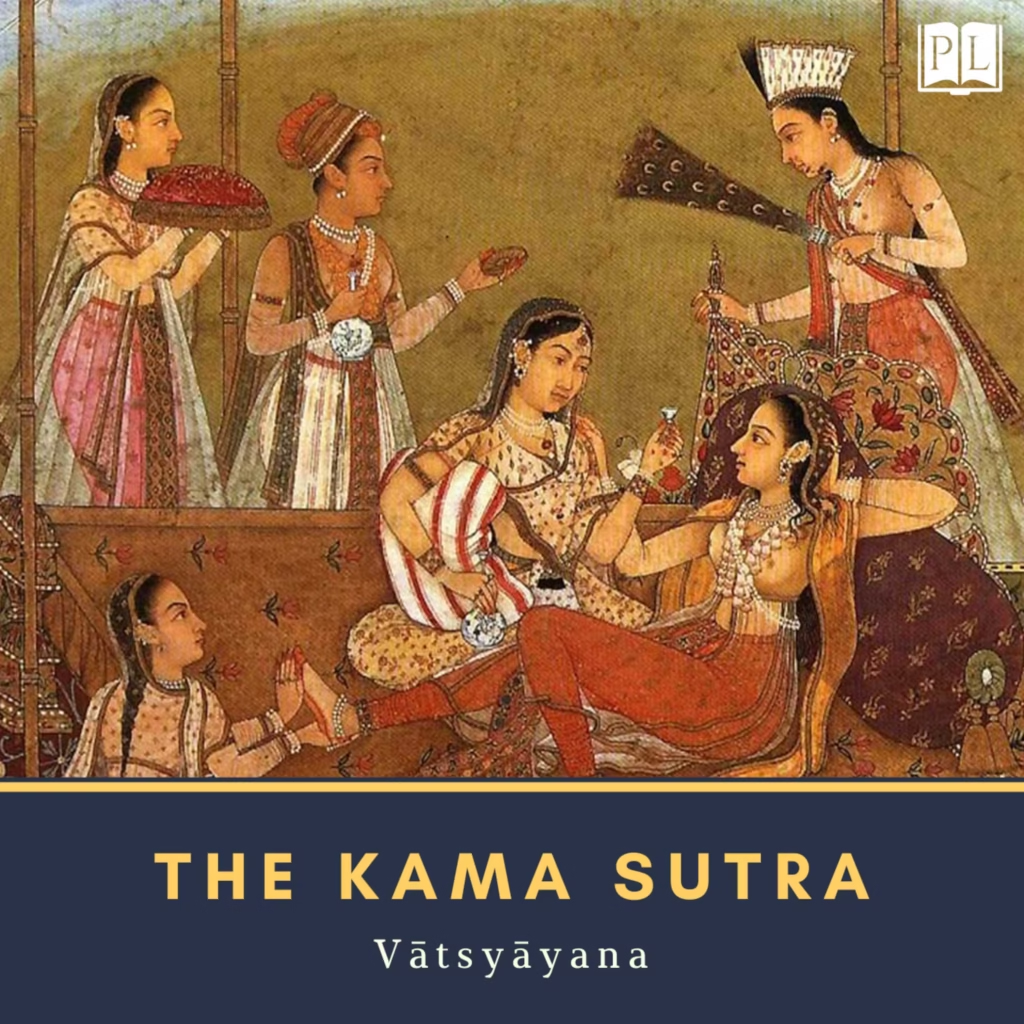
The Doniger/Kakar Translation: A Clearer Lens
A crucial development in understanding the Kama Sutra accurately is the translation by Wendy Doniger and Sudhir Kakar. Their work offers a “radically different view” from the earlier, misleading versions. This new translation is presented in “clear, vivid, sexually frank English,” directly correcting the inaccuracies of the Burton version. The scholarly depth of the Doniger/Kakar edition is evident in its comprehensive 57-page introduction.
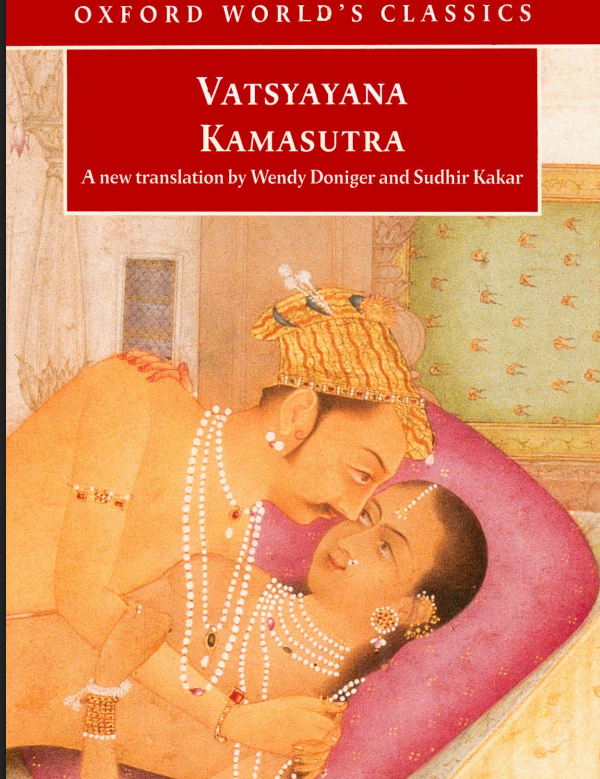
Kama Sutra in its historical context, elucidates its numerological conceits, and clarifies its gender ambiguities, providing essential background for a nuanced reading.
This scholarly endeavor represents more than just a linguistic translation; it is an act of cultural reclamation. By offering a corrective to long-standing historical inaccuracies, Doniger and Kakar have worked to restore the authentic essence of the Kama Sutra, disentangling it from the misinterpretations imposed by colonial-era biases. This demonstrates the profound impact of rigorous academic scholarship in shaping and correcting public discourse, particularly when dealing with texts that have been culturally appropriated or fundamentally misunderstood. Engaging with this translation, or learning about its significance, becomes an act of intellectual liberation from past prejudices, inviting a more informed and respectful appreciation of ancient Indian thought.
Kama Sutra: A Guide to the “Art of Living Well”
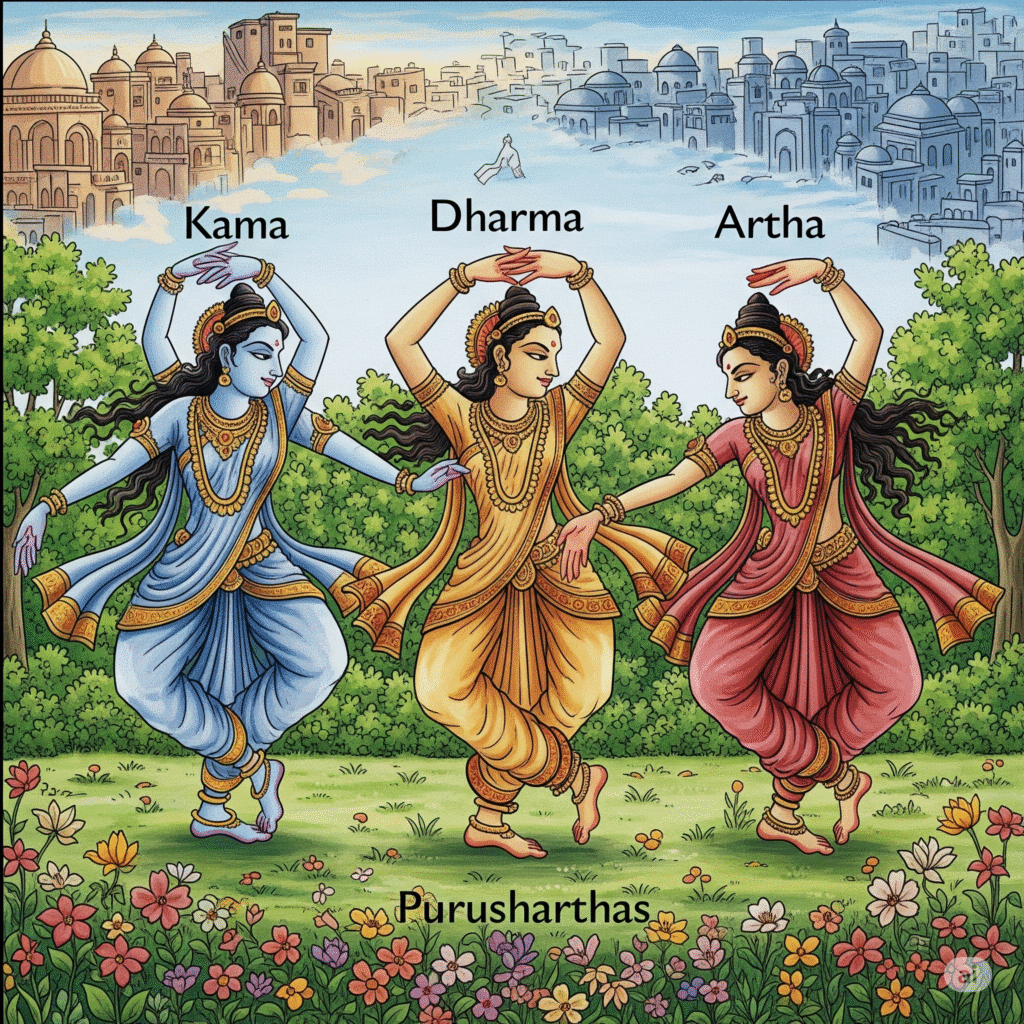
At its core, the Kama Sutra is a comprehensive guide to a well-rounded and fulfilling life. It belongs to kama-shastra, “the science of kama,” which was considered one of the three principal human sciences. The text acknowledges the Hindu concept of purusharthas, which outlines the proper goals of human life: dharma (moral responsibility or ethical conduct), artha (material prosperity or success), and kama (desire, sexuality, and emotional fulfillment).
Kama Sutra advises on how to balance these objectives, presenting kama not as an isolated pursuit but as an integral component of a balanced and ethical existence. It defines kama as “love” that does not violate dharma and artha, and positions it as part of the broader journey towards moksha (spiritual liberation). The overarching aim of this ancient Indian literature is to foster a “harmonious sensory experience” derived from a positive relationship between “the self and the world,” achieved by discovering and enhancing one’s sensory capabilities.
The integration of kama with dharma and artha within the purusharthas framework reveals a sophisticated ancient understanding of well-being. This perspective suggests that pleasure is not merely a physical or fleeting sensation but an interconnected aspect of a holistic and ethical life. This stands in contrast to modern tendencies to compartmentalize life into distinct areas like work, relationships, and personal fulfillment. The Kama Sutra‘s framework implies that a truly well-lived life necessitates a conscious effort to harmonize these elements, encouraging an integrated approach to personal development and societal contribution.
Cultivating Connection: Relationship Wisdom from Ancient India
Finding Your Match: Ancient Courtship & Compatibility
The Kama Sutra provides detailed advice on the art of attracting a partner, emphasizing social engagement and the importance of shared values. It describes playful flirting techniques that continue to resonate in a modern context. For instance, it suggests a young man could host a party where guests are invited to recite poetry, with a challenge to creatively complete missing parts of a poem. Another example involves a man playfully surprising a woman while swimming, by diving underwater and emerging close to her, touching her lightly before diving away again. These examples illustrate that fundamental human attraction and social interaction patterns have enduring qualities across millennia.
The text places significant emphasis on finding partners who possess “the same qualities” and recommends associating with “equals, people of one’s own circle” who share similar values and religious outlook. This pragmatic approach to partnership highlights a community-oriented perspective, suggesting that strong, integrated relationships are built on a foundation of shared principles and social compatibility.
Kama Sutra also advises involving friends and relatives in the search for a partner and meeting the future partner’s existing social circle prior to marriage. This demonstrates that while the specific methods of courtship may evolve, the underlying principles of connection, social vetting, and seeking compatibility remain remarkably consistent.

The Nuance of Intimacy: Mutual Desire, Respect, and Communication
Perhaps one of the most striking revelations from the Kama Sutra is its surprisingly modern emphasis on consent and mutual pleasure within intimate relationships. The text explicitly states the “importance of mutual agreement and respect in sexual relationships,” asserting that “force and coercion do not lead to genuine pleasure”. This foundational principle underscores that true intimacy necessitates a willingness to engage with one’s partner’s desires. The advice extends to respecting individual preferences, recognizing that not all techniques are suitable for everyone, and adapting one’s approach based on the specific context and the partner’s needs. The overarching goal is to prioritize mutual pleasure, creating a sexual experience that is enjoyable for both individuals.
Furthermore, the Kama Sutra actively encourages “exploration and communication to enhance intimacy”. It advises partners to “talk to each other about your likes and dislikes, and what you do and don’t feel comfortable doing”. This focus on open dialogue and understanding is remarkably aligned with contemporary discussions on healthy sexual relationships and consent. The text also provides specific guidance for men, urging them to be “gentle and patient with virgins, recognizing their fears and inhibitions,” and to be “aware of women’s signals and responses”. This demonstrates a sophisticated understanding of human psychology in intimate contexts, prioritizing genuine connection and empathy over mere physical acts. The presence of such principles in an ancient text challenges the notion that concepts of consent and nuanced communication are purely modern inventions, revealing a historical precedent for ethical and empathetic relational dynamics.
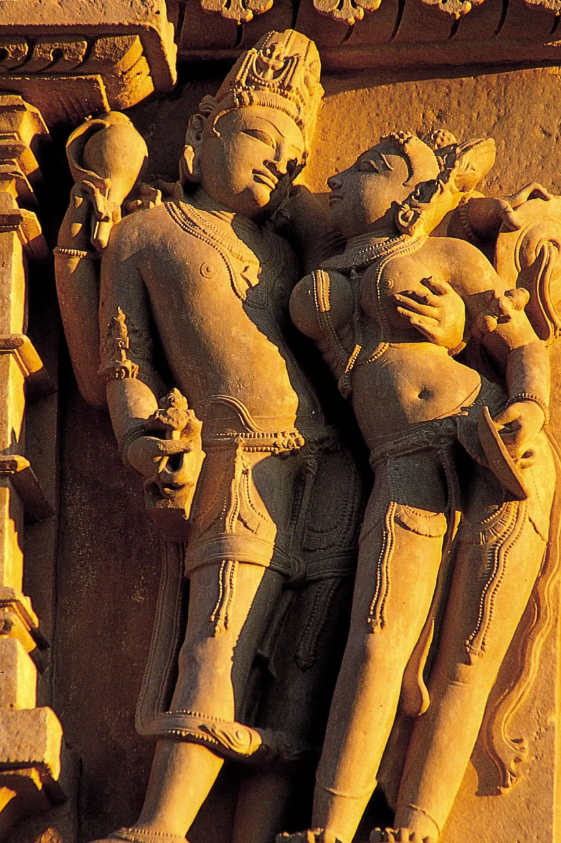
Beyond Romantic Love: Friends, Family, and Social Bonds
The wisdom of the Kama Sutra extends beyond romantic or sexual partnerships, recognizing the integral role of broader social connections in a fulfilling life. Part five of the text, titled “Gonikaputra — Friends and family,” specifically outlines the roles of different genders in nonsexual relationships. This section provides guidance on “how to understand emotions” and “how to deepen bonds between family and friends”.
The inclusion of sections dedicated to friends and family within a text primarily known for “love” indicates a holistic view of human connection. It implies that romantic relationships do not exist in isolation but are deeply embedded within a broader social fabric. This perspective emphasizes the importance of nurturing diverse relationships and understanding how they contribute to overall well-being and a fulfilling life, encouraging a broader view of personal connection beyond solely romantic partnerships.
The Complex World of Courtesans: Skill, Strategy, and Agency
The Kama Sutra‘s treatment of courtesans offers a nuanced perspective that moves beyond simplistic interpretations. In this text, courtesans are portrayed “not just as sexual partners but as highly skilled and educated women who have mastered the art of pleasure”. They are depicted as “intelligent, witty, and sophisticated, capable of engaging men on multiple levels”.
Kama Sutra provides detailed advice on how courtesans can attract and engage lovers, including mastering the “sixty-four arts,” understanding male psychology, and cultivating an alluring persona. It also offers guidance on managing finances, navigating complex relationships, and even strategies for reconciling with ex-lovers.
This detailed guidance, emphasizing their education, skills, and strategic approach to relationships, transforms courtesans from mere “prostitutes” into figures of considerable agency and professionalism within their societal context. This challenges a purely moralistic or simplistic modern interpretation, revealing a more complex ancient social structure where certain women held significant influence through their mastery of arts, psychology, and social dynamics. This historical portrayal can prompt discussions about historical roles, economic realities, and the multifaceted nature of agency, even within seemingly constrained social positions.
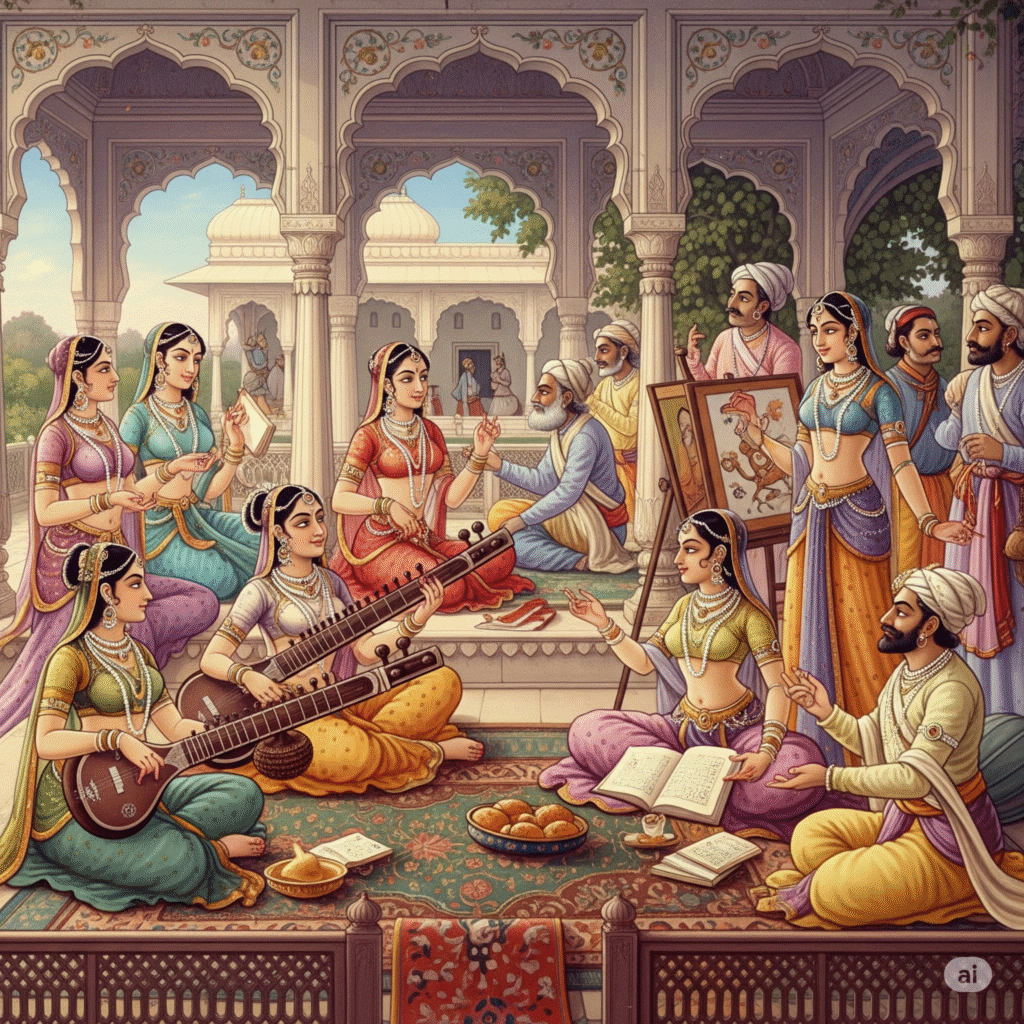
The Art of Self-Cultivation: Personal Growth in the Kama Sutra
The Cultivated Individual: Knowledge and Honorable Living
The Kama Sutra commences with “General principles” (Dattaka), a foundational section that offers advice on “how to live an honorable life and how to acquire knowledge”. This deliberate structural choice by Vatsyayana, placing ethical conduct and intellectual development at the very beginning before delving into more specific relationship advice, conveys a powerful message.
It implies that true kama (pleasure and desire) is not merely physical or instinctual, but is built upon a robust foundation of ethical behavior, intellectual cultivation, and social grace. The text emphasizes the importance of training in “the arts to be socially engaging” and cultivating various artistic skills. This perspective suggests that personal fulfillment and successful relationships are not solely about physical attraction or fleeting desires, but require continuous self-improvement, learning, and adherence to a moral compass.
The Sixty-Four Arts: Social Grace and Personal Presentation
The Kama Sutra implicitly and explicitly advocates for the mastery of various arts as a means to enhance social engagement and personal attractiveness. These “sixty-four arts” encompass a wide range of skills, including music, dance, painting, eloquent conversation, and flattery. This emphasis indicates that ancient Indian society valued a well-rounded individual who was not only knowledgeable but also aesthetically refined and socially adept.
Beyond mere superficiality, this cultivation of skills was seen as enabling deeper connection, more effective communication, and greater influence within social circles. Furthermore, the text touches upon personal grooming and the use of perfumes and oils within its “Occult practices” (Kuchumara) section, highlighting self-care and personal enhancement as part of a holistic approach to well-being. This perspective highlights the enduring importance of hobbies, creative pursuits, and strong communication skills as tools for personal growth, building confidence, and fostering meaningful relationships, extending beyond a narrow focus on academic or professional success.
Understanding Emotions and Building Confidence
A significant aspect of self-cultivation within the Kama Sutra involves the development of emotional intelligence. The text teaches “how to understand emotions” and “how to deepen bonds between family and friends”. It delves into “sexual psychology” and explores the “complexities of desire,” categorizing different types of love such as love that develops through habit, arises from erotic arousal, is transferred from one object to another, or is driven by immediate sensual gratification. This explicit focus on emotional understanding demonstrates an ancient recognition of emotional intelligence as crucial for successful relationships and overall personal well-being.
Moreover, Part six, “Charayana — Courtesans,” notably discusses a man’s engagement with courtesans as a means “to build confidence in his sexual abilities before pursuing a wife”. This aspect points to an understanding of self-efficacy and psychological readiness in intimate contexts. This section also provides advice on “fixing relationships with friends and lovers”. The emphasis on emotional literacy and self-awareness was considered essential life skills, offering a timeless lesson for navigating one’s own emotional landscape and fostering healthier connections.
Progressive Insights: Women’s Education and Agency
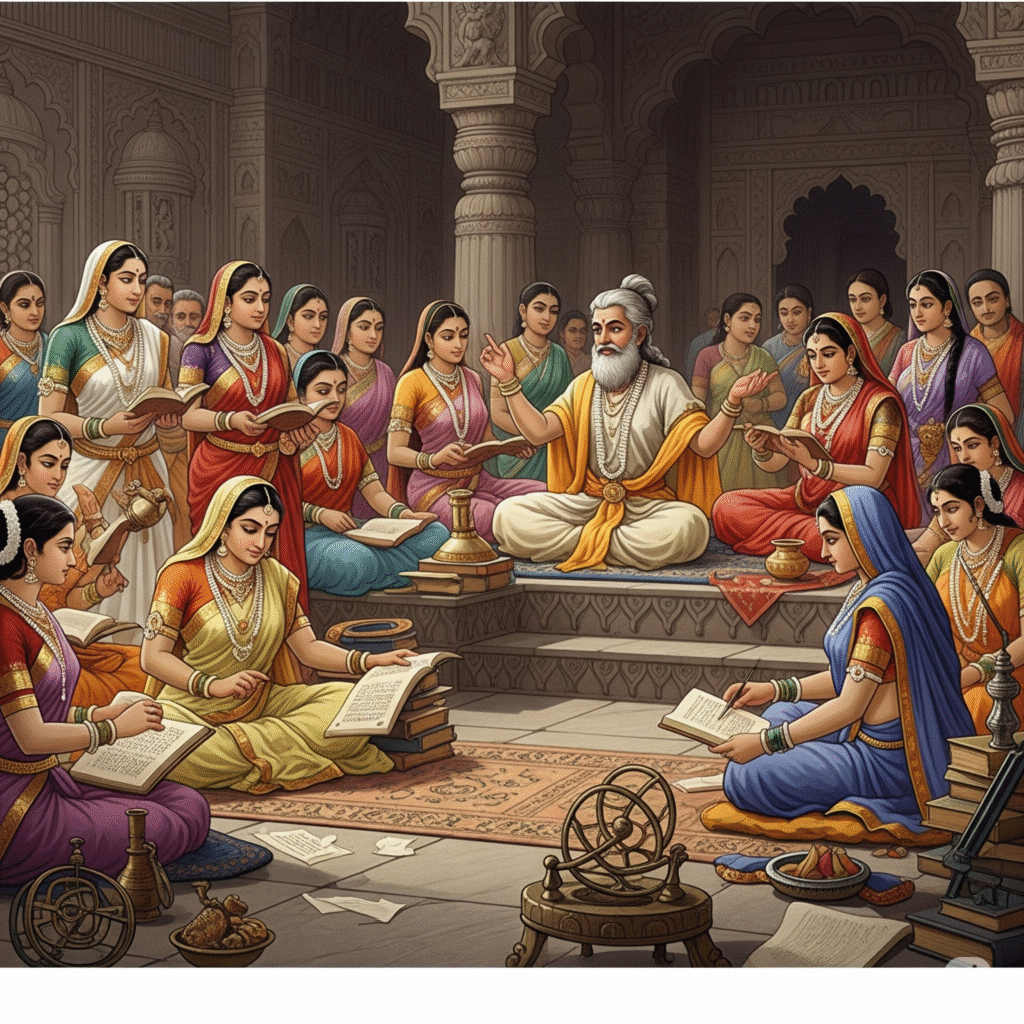
A particularly noteworthy and often overlooked aspect of the Kama Sutra is its surprisingly progressive stance on women’s education and agency. The text reveals that “women were educated in matters of sexuality, medicine, and personality enhancement”. Significantly, Sage Vatsyayana explicitly “rejects scholars’ argument… not to educate women in Shastras, including Kama”. This direct advocacy for female education, even in areas related to Kama Shastra, directly challenges common modern assumptions about ancient patriarchal societies.
The Kama Sutra also identifies various trusted mentors for young women embarking on their journey of sexual discovery, including foster-sisters, girlfriends, maternal aunts, trusted servants, and even female renunciants. This highlights a holistic approach to education, encompassing both familial and social networks.
Crucially, women are depicted “not merely as objects of desire, but as individuals with their own emotions and needs, essential for the complete experience of erotic pleasure”. This portrayal suggests a more nuanced historical reality regardin.g women’s intellectual and sexual agency than is often presented. Such elements within the text offer a powerful example of how historical documents can contain surprising progressive elements, encouraging a critical examination of stereotypes and an appreciation for the complexities of historical gender roles and educational practices. The emphasis on female mentorship and peer support in personal development remains a relevant concept even today.
Timeless Principles, Modern Relevance: Adapting Ancient Wisdom Today
The Kama Sutra, while a product of its time, contains a wealth of wisdom that transcends centuries and cultures. Understanding its enduring principles requires a discerning approach, distinguishing between aspects that remain universally applicable and those rooted in specific ancient Indian societal norms.
Navigating Cultural Context: What Still Applies, What Doesn’t
It is important to acknowledge that some elements of the Kama Sutra are deeply embedded in the social and cultural context of ancient India and may not directly translate to contemporary life. For instance, Part four, “Gonardiya — Duties and privileges of the wife,” discusses traditional wifely duties such as cooking, cleaning, and catering to her husband. Similarly, the Kama Sutra‘s engagement with the caste system in relation to marriage is another example of a culturally specific element.
Explicitly identifying these culturally situated sections is crucial for a modern audience. This approach demonstrates that even a foundational text like the Kama Sutra is a historical artifact, shaped by its era. It encourages critical thinking about how societal values evolve over time and how to extract universal principles from historically specific advice.
Universal Principles for Lasting Connections
Despite its ancient origins, the Kama Sutra offers core wisdom that remains profoundly relevant for fostering lasting and fulfilling connections in the modern world.
Consent and Mutual Pleasure: A cornerstone of the text’s advice is the emphasis on “mutual agreement and respect” in intimate relationships, and the clear assertion that “force and coercion do not lead to genuine pleasure”. This principle is fundamental for any healthy intimate relationship, regardless of time or place.
Communication: The encouragement for “exploration and communication to enhance intimacy” remains paramount. The text advises partners to “talk to each other about your likes and dislikes, and what you do and don’t feel comfortable doing”. Open and honest communication is a timeless pillar of strong relationships.
Emotional Intelligence: The Kama Sutra‘s focus on understanding desires, emotions, and psychological factors in relationships highlights the enduring importance of emotional intelligence for navigating human connections successfully.
Holistic Well-being: The integration of kama with dharma (ethical living) and artha (material prosperity) underscores the importance of balancing various aspects of life for overall fulfillment. This holistic approach to well-being remains a valuable framework for contemporary life.
Self-Cultivation: The emphasis on acquiring knowledge, mastering arts, and cultivating social grace points to the enduring value of personal growth and self-improvement as foundations for a rich and meaningful existence.
The enduring relevance of these principles, despite the passage of centuries and vast cultural differences, suggests that certain fundamental human needs for connection, pleasure, and purpose are universal and timeless. This provides reassurance that while the world undergoes rapid transformation, the bedrock principles of healthy relationships and personal fulfillment have deep historical roots, offering a sense of continuity and shared human experience across generations.

The Seven Parts of the Kama Sutra: Ancient Focus & Modern Relevance
To provide a structured overview of the Kama Sutra‘s comprehensive content and bridge its historical context with contemporary application, the following table details each of its seven parts.
- Dattaka — General Principles
Ancient Focus: Emphasizes the aims of Hindu life (dharma, artha, kama, moksha), honorable living, and acquiring knowledge.
Modern Relevance: Promotes a balanced life integrating ethics, personal growth, and continuous learning. It underscores the importance of aligning relationships with values like integrity and mutual respect, encouraging individuals to pursue self-improvement alongside meaningful connections. - Suvarnanabha — Amorous Advances and Sexual Union
Ancient Focus: Details 64 sexual acts, including embracing, kissing, and oral sex, focusing on physical intimacy.
Modern Relevance: Highlights consensual exploration, open communication about desires, and prioritizing mutual pleasure. It encourages couples to foster intimacy through trust and understanding, adapting ancient techniques to modern emphasis on equality and consent. - Ghotakamukha — Acquiring a Wife
Ancient Focus: Covers courtship, astrological compatibility, family benefits, and adherence to the social caste system.
Modern Relevance: Translates to strategic dating, focusing on deeper compatibility (values, goals) beyond superficial attraction. It suggests involving social circles for support and understanding partner expectations, while moving away from rigid structures like caste to embrace inclusivity. - Gonardiya — Duties and Privileges of the Wife
Ancient Focus: Outlines traditional roles like cooking and catering to the husband, reflecting historical gender norms.
Modern Relevance: Provides historical context for evolving gender roles, emphasizing equitable partnerships. It encourages shared responsibilities, mutual support, and redefining duties to fit modern egalitarian relationships, acknowledging diverse family structures. - Gonikaputra — Friends and Family
Ancient Focus: Explores gender roles in nonsexual relationships, emotional understanding, and deepening bonds.
Modern Relevance: Stresses the value of diverse social networks and emotional intelligence in all relationships, not just romantic ones. It promotes building strong community ties and nurturing platonic connections for a well-rounded support system. - Charayana — Courtesans
Ancient Focus: Discusses men using courtesans for sexual confidence, relationship repair, wealth, or commitment.
Modern Relevance: Offers insight into historical social dynamics and complex roles like courtesans. It encourages understanding agency, personal growth through diverse experiences, and strategic relationship management, while respecting modern ethical boundaries. - Kuchumara — Occult Practices
Ancient Focus: Covers sexual myths, grooming, perfumes, and homeopathic remedies tied to intimacy and well-being.
Modern Relevance: Emphasizes self-care, personal presentation, and cultural influences on intimacy. It connects historical practices to modern wellness trends, encouraging mindfulness in how personal care enhances relationships and self-confidence.
Conclusion: The Enduring Legacy of Vatsyayana’s Wisdom
The Kama Sutra, when understood through an accurate and scholarly lens, emerges not as a sensationalized sex manual, but as a profound and comprehensive guide to the “art of living well.” Its wisdom extends far beyond physical intimacy, encompassing the cultivation of self, the dynamics of diverse relationships, and the pursuit of a balanced and fulfilling life. The text emphasizes mutual respect, open communication, emotional intelligence, and the harmonious integration of pleasure (kama) with ethical conduct (dharma) and material prosperity (artha).
Vatsyayana’s ancient treatise offers a timeless roadmap for human connection and personal development. It encourages individuals to approach relationships and self-discovery with curiosity, empathy, and a nuanced understanding. By appreciating the Kama Sutra‘s true scope, one can draw invaluable inspiration from this ancient wisdom, adapting its enduring principles to navigate the complexities of the contemporary world and forge richer, more connected human experiences.