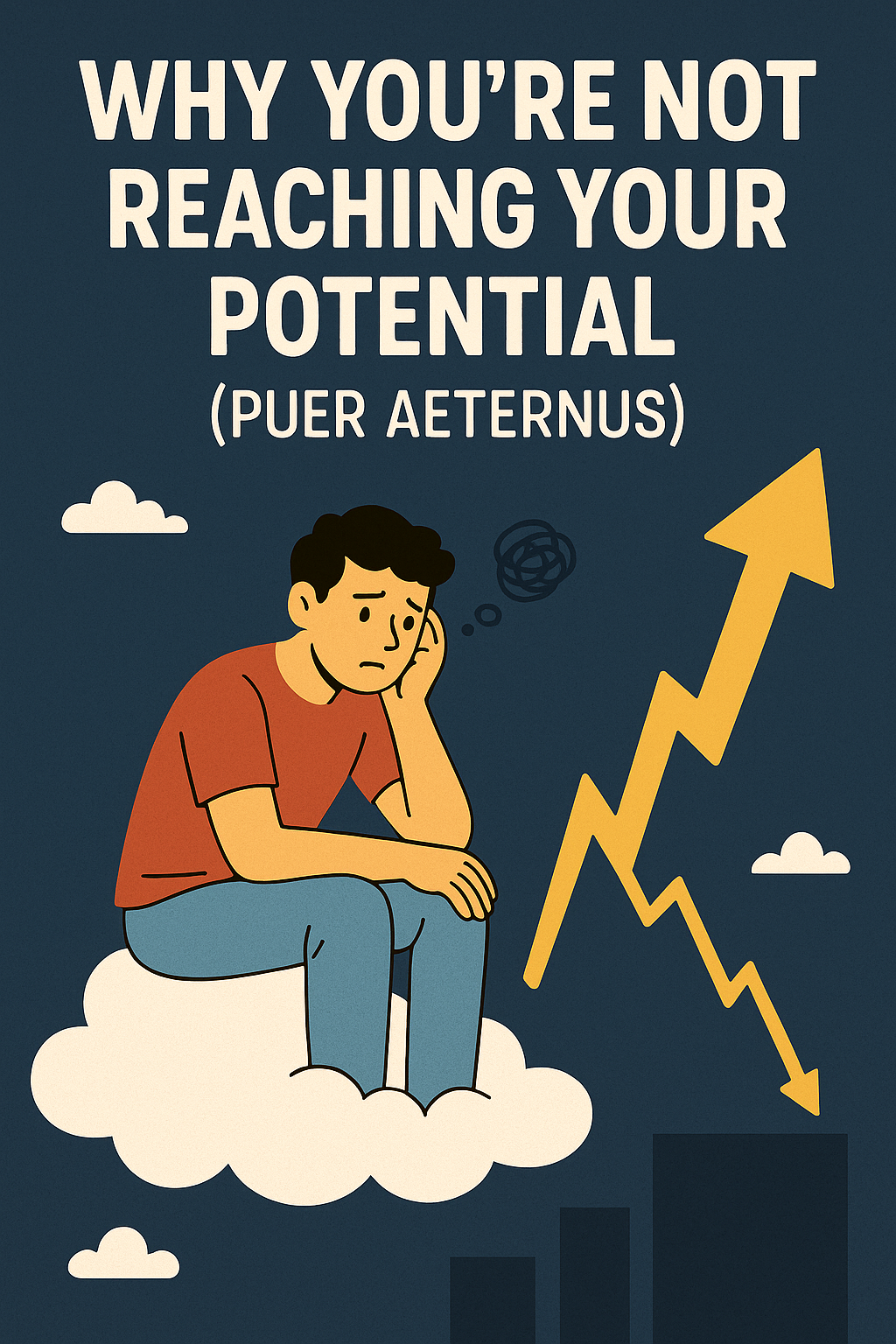
Ever met someone who’s got that spark—endlessly creative, charming as heck, but just can’t seem to “adult” properly? They’re dreaming of the next big thing, hopping from one passion to another, but long-term commitments? Nope, not their jam. In Jungian psychology, this is the puer aeternus—Latin for “eternal youth.” It’s like the psychological version of Peter Pan, and it’s way more than just refusing to grow up. Let’s dive into what this archetype is, where it comes from, why it’s so relatable, and how it plays out in real life with some fun examples. Buckle up for a deep but chill ride through the land of eternal youth!
What’s the Puer Aeternus Anyway?
Picture a 30-something who’s still crashing on their friend’s couch, sketching epic graphic novels they never finish, or planning a world-changing startup that’s “almost ready.” That’s the puer aeternus vibe. Coined by Carl Jung, the Swiss brainiac behind archetypes, this term describes folks who, no matter their age, live with the heart and mind of a teenager. They’re bursting with ideas, charisma, and a zest for life, but responsibility—bills, 9-to-5s, or serious relationships—feels like a buzzkill.
The puer aeternus (or puella aeterna for women) isn’t just about being immature. It’s a deeper psychological pattern where someone clings to the freedom and wonder of youth, dodging the gritty realities of adult life. Jung saw it as an archetype—a universal human tendency rooted in our collective unconscious. Think of it as the inner teenager who wants to fly off to Neverland instead of doing taxes.
Marie-Louise von Franz, Jung’s brilliant protégée, dug deep into this archetype in her book The Problem of the Puer Aeternus. She described these folks as living a “provisional life,” always waiting for the perfect moment to “really start” living. Spoiler: that moment rarely comes. But the puer isn’t all bad—they’re often the dreamers, artists, and innovators who bring magic to the world. The trick is balancing that spark with some grown-up grit.
Where Does It Come From?
The puer aeternus archetype has roots in mythology and psychology. In ancient myths, gods like Hermes or Dionysus embody this eternal youth—playful, mischievous, and free-spirited, but not exactly role models for paying rent on time. Jung and von Franz saw this archetype in people who struggle with what Jung called individuation—the process of becoming a whole, integrated person. For the puer, growing up feels like losing something precious, so they resist it like it’s a bad social media trend.
One big psychological driver is the mother complex. No, it’s not just “mommy issues.” The puer often has a deep emotional tie to a nurturing figure (literal or symbolic), which can keep them dependent or craving approval. This can show up as unrealistic expectations—like wanting a partner who’s more like a caretaker than an equal—or a fear of being “tied down” by adult responsibilities.
The Puer in Action: Real-Life Examples
Let’s paint some pictures to see the puer aeternus in the wild:
- Jake, the Wandering Musician: Jake’s 35, plays killer guitar, and has a cult following at local open mics. He’s got big dreams of “making it” but hasn’t recorded an album because “the vibe’s not right yet.” He crashes with friends, avoids steady gigs, and dates people who end up frustrated by his flakiness. Jake’s charm and talent are undeniable, but his puer side keeps him stuck in a loop of “someday” promises.
- Maya, the Eternal Dreamer: Maya’s a 28-year-old graphic designer who’s always sketching stunning concepts but never finishes client projects. She’s obsessed with the idea of launching her own art brand, but every few months, she pivots to a new “passion project.” Her Instagram’s full of inspirational quotes about “living your truth,” but her bank account’s screaming for a reality check. Maya’s puella aeterna spark makes her magnetic, but her fear of commitment holds her back.
- Pop Culture Puers: Think of characters like Ferris Bueller from Ferris Bueller’s Day Off—charming, rebellious, and allergic to rules. Or even real-life figures like certain celebs who bounce between projects, relationships, and scandals, always chasing the next high. Kanye West, anyone? His creative genius is pure puer energy, but his struggles with stability scream puer challenges too.
These examples show the puer’s double-edged sword: their youthful energy is infectious, but without grounding, it can lead to a life of unfulfilled potential.
Why It’s So Relevant Today?
The puer aeternus is having a moment in 2025. Our culture practically worships youth—think Instagram filters that shave off years, TikTok trends that scream “YOLO,” or the gig economy that lets you hustle without a 9-to-5. Social media amplifies the puer vibe, with influencers flaunting carefree lifestyles while dodging the boring stuff like taxes or long-term planning. No shade, but when 30 is the new 20, it’s easy to stay in puer mode.
The term “Peter Pan syndrome” (yep, straight outta Neverland) is the pop-culture cousin of puer aeternus. It’s tossed around on X and Reddit threads where people vent about friends—or themselves—stuck in perpetual adolescence. One X post I found sums it up: “Why’s my 40yo buddy still chasing crypto dreams and living in his mom’s basement? Bro, grow up!” Harsh, but it captures the frustration of watching puer traits play out.
But it’s not just personal. Von Franz argued the puer can reflect a societal “spiritual crisis.” When a whole culture glorifies youth and instant gratification, we get a world where long-term thinking takes a backseat. Sound familiar?
The Good, the Bad, and the Path Forward
Let’s be real: the puer aeternus isn’t all bad. Their creativity, optimism, and refusal to conform can shake things up in the best way. Think of the artists, inventors, or activists who challenge the status quo. The problem comes when the puer’s fear of “settling” keeps them from building something lasting.
So, how do you keep the puer magic without getting stuck? Von Franz’s answer is individuation—finding a balance between your inner dreamer and the adult who pays the bills. Here’s a fun, practical guide to taming the puer without losing your spark:
- Pick a Quest and Stick With It: Choose one passion project and commit to it for six months. Finish that novel, launch that Etsy shop, or nail that coding bootcamp. Discipline doesn’t kill creativity—it channels it.
- Set Mini-Goals: Big dreams are cool, but break them into bite-sized steps. Want to be a YouTube star? Start with one video a week. Small wins build momentum.
- Face the Feels: The puer often runs from tough emotions. Try journaling or therapy to unpack fears about “growing up” or letting go of that mother complex.
- Own the Boring Stuff: Pay a bill on time. Do laundry. Mentor a kid. These small acts of responsibility build confidence that you can handle adulting without losing your vibe.
- Find Your Crew: Surround yourself with people who balance maturity and playfulness. They’ll inspire you to grow without making you feel like a sellout.
Wrapping It Up
The puer aeternus is more than a fancy psych term—it’s a lens to understand why some of us (or our friends) keep chasing that youthful high while dodging life’s heavier stuff. It’s the dreamer who never lands, the artist who never finishes, the adventurer who never commits. But it’s also the spark that fuels creativity and shakes up the world.
By recognizing the puer in ourselves, we can harness its magic while building a life that’s both free and grounded. As von Franz might say, it’s not about killing your inner Peter Pan—it’s about teaching him to fly and pay the price for the life you wanna build.
Check out The Problem of the Puer Aeternus by Marie-Louise von Franz for the full Jungian scoop.